
How Do You Choose the Right Solder Pallet Material for Your Process?
Written By Loris Chow
You know what a solder pallet is and why it’s critical. But now you face the core decision: choosing the material. Pick the wrong one, and you could face warping, chemical damage, and a short pallet lifespan, undermining your entire investment.
To choose the right solder pallet material, you must conduct a solder pallet material comparison based on four key properties: thermal resistance, chemical resistance, mechanical strength, and anti-static performance. The best choice directly aligns with your specific process temperatures, flux chemistry, and budget.
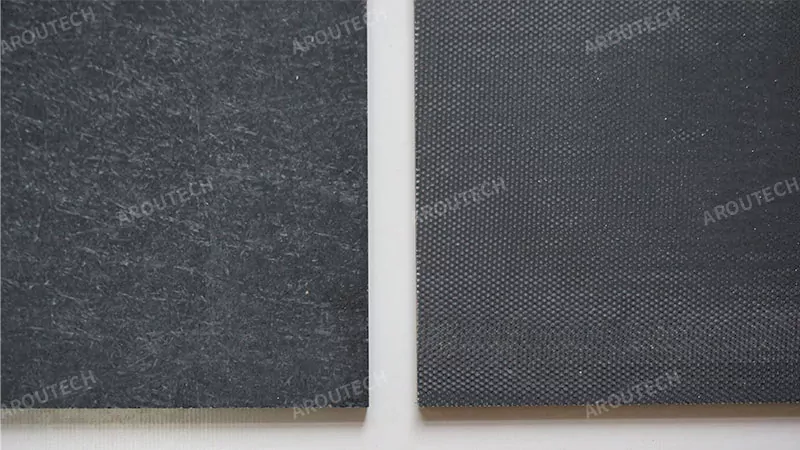
Early in my career, we had a production line running a particularly aggressive flux for a medical device. We initially used a standard, cost-effective pallet material. Within weeks, the pallets started to get sticky and show surface pitting. We were seeing defects from flux residue transfer. It was a classic case of failing to match the material to the process. We switched to a material with superior chemical resistance, and the problem vanished. This taught me that the core decision isn’t just about price; it’s about a deep understanding of the material’s properties.
What Key Properties Define a High-Quality Solder Pallet Material?
You’re faced with datasheets full of numbers. How do you cut through the noise and focus on the properties that truly matter for performance and longevity?
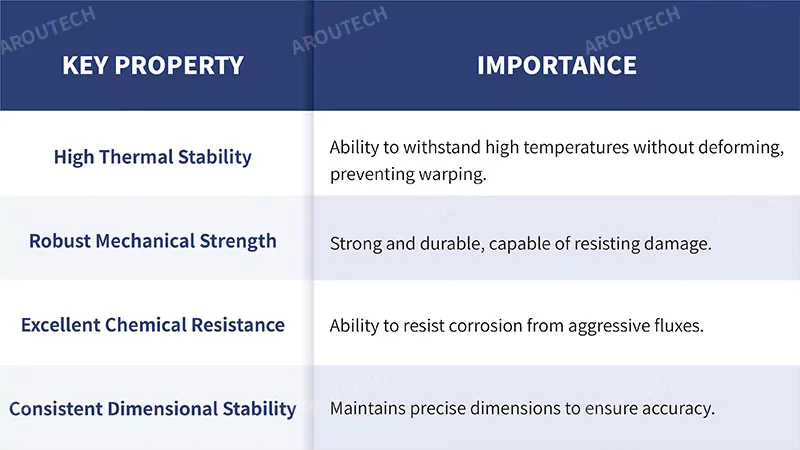
High-quality solder pallet materials are defined by four critical specifications: high thermal stability to prevent warping, robust mechanical strength to resist damage, excellent chemical resistance against aggressive fluxes, and consistent dimensional stability for precision.
Dive Deeper: The Four Pillars of Material Performance
When you’re doing a solder pallet material comparison, these are the four non-negotiable properties you must analyze. Each one directly impacts the pallet’s ability to perform its job reliably over thousands of cycles. A failure in any one of these areas can lead to soldering defects, increased downtime, and higher long-term costs. Understanding these pillars is the first step in learning how to choose solder pallet material that will enhance, not hinder, your production.
| Key Property | Why It’s Critical | Impact of Poor Performance |
|---|---|---|
| Thermal Resistance | Must withstand repeated cycles of extreme heat (often >280°C for lead-free solder) without warping, softening, or degrading. | Warped pallets cause misalignment, leading to solder skips or bridges. Poor heat handling can also negatively affect the PCB’s thermal profile. |
| Chemical Resistance | Must resist aggressive chemicals found in modern solder fluxes and cleaning agents. This is key to preventing solder flux damage to pallets. | Material can become sticky, brittle, or swell. This leads to flux residue buildup, which can contaminate PCBs and cause defects. |
| Mechanical Strength | Needs to be strong enough to support the PCBA without flexing and durable enough to resist chipping or cracking from daily handling. | Pallets can break, causing production halts. Flexing under load leads to the same alignment issues as thermal warping. |
| Anti-Static Properties | Must safely dissipate static electricity to protect sensitive electronic components (ESDS) from damage during handling. | Risk of electrostatic discharge (ESD) events that can destroy sensitive microchips on the PCBA, leading to latent field failures. |
Durostone vs. Ricocel: Which Material Wins for Your Application?
You’ve likely heard the two biggest names in the industry: Durostone and Ricocel. They are the benchmarks, but they aren’t interchangeable. Which one is actually right for you?
The Durostone vs. Ricocel decision depends on your primary challenge. Durostone is the champion of thermal and mechanical strength, ideal for high heat and heavy boards. Ricocel excels in chemical resistance, making it the top choice for processes with aggressive fluxes.
Dive Deeper: A Head-to-Head Material Showdown
Choosing between the industry leaders requires looking closely at their solder pallet material specifications. While both are excellent composite materials, they are engineered with different strengths. Durostone’s formulation prioritizes glass reinforcement for mechanical robustness and thermal stability, making it a workhorse for demanding physical and thermal environments. Ricocel, conversely, uses a resin system optimized to resist chemical attack, ensuring a longer lifespan when exposed to harsh fluxes.
But what if your process demands the best of both worlds? That’s where specialized materials come in. For example, our Betronic FM series is engineered to match Durostone’s thermal performance while enhancing chemical resistance, and our Betronic FC series rivals Ricocel’s chemical resilience while boosting mechanical strength. The choice often comes down to a trade-off between performance and the cost of Durostone sheet or other materials.
| Feature | Durostone | Ricocel | The Verdict |
|---|---|---|---|
| Thermal Resistance | Excellent. The industry standard for high-heat, lead-free processes. | Good. Reliable for most applications, but Durostone has the edge in extreme heat. | Winner: Durostone |
| Chemical Resistance | Good. Sufficient for many standard fluxes. | Excellent. Specifically designed to withstand aggressive, no-clean flux chemistries. | Winner: Ricocel |
| Mechanical Strength | Excellent. Very rigid and resistant to chipping and cracking. Ideal for heavy boards. | Good. Strong enough for most applications, but not as robust as Durostone. | Winner: Durostone |
| Best Use Case | High-volume, lead-free soldering; large/heavy PCBs; when physical durability is paramount. | Processes using aggressive or highly-activated fluxes; when pallet cleanliness is critical. | Depends on your biggest process challenge. |
How Do You Make the Final, Cost-Effective Choice?
You understand the properties and the top materials. Now, how do you translate that knowledge into a final decision that balances performance with your budget?
To make the final choice, you must quantify your process needs. Define your maximum soldering temperature and flux type, then select the lowest-cost material that safely exceeds those specifications. Over-specifying adds unnecessary cost.
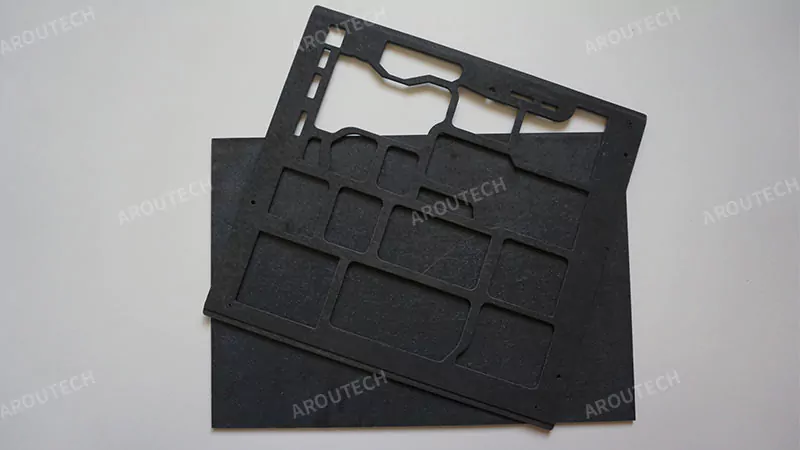
Dive Deeper: A Practical Selection Framework
Making the right choice is a systematic process, not a guess. Start by documenting the realities of your production line. Don’t choose a material designed for a 300°C process if your line never exceeds 265°C. Conversely, don’t save a few dollars on a material with moderate chemical resistance if you know your flux is aggressive—the cost of replacing the pallet prematurely and dealing with defects will be far higher. This is what is the best material for wave solder pallets: the one that meets your needs without excessive cost.
- Define Your Thermal Load: What is the peak temperature your pallet will see? Add a safety margin of 15-20%.
- Identify Your Flux Chemistry: Is it a low-solids, no-clean flux, or a highly-activated type? Be honest about its aggressiveness.
- Assess Mechanical Stress: Are your boards large and heavy? Is the pallet handled frequently by many different operators?
- Evaluate the Options:
- Standard Process: If you have a moderate thermal and chemical load, a general-purpose material like CDM or a standard grade of composite might suffice, offering the best cost-effectiveness.
- High-Heat or Heavy-Duty Process: If your primary challenge is heat or mechanical stress, Durostone is your baseline.
- Aggressive Chemical Process: If your flux is the main concern, Ricocel is your starting point.
- Extreme or Mixed Demands: If you face both high heat and aggressive flux, you need a premium, specialized material like our Betronic series to avoid compromising.
Conclusion
Choosing the right solder pallet material is a core decision that echoes through your production’s quality, efficiency, and cost. By systematically comparing materials based on the key properties of thermal, chemical, and mechanical resistance, you can move beyond brand names and make an informed choice that perfectly matches your process needs and budget.
References
- Solder Pallet: Wikipedia contributors. "Solder pallet." Wikipedia, The Free Encyclopedia.
- Durostone / Glass-Reinforced Plastic: Wikipedia contributors. "Glass-reinforced plastic." Wikipedia, The Free Encyclopedia.
- Electrostatic Discharge (ESD): The ESD Association.
- Solder Flux: Wikipedia contributors. "Flux (metallurgy)." Wikipedia, The Free Encyclopedia.
Latest insights & related news
What is a Wave Solder Pallet and Why is it Critical for Your PCBA Production?
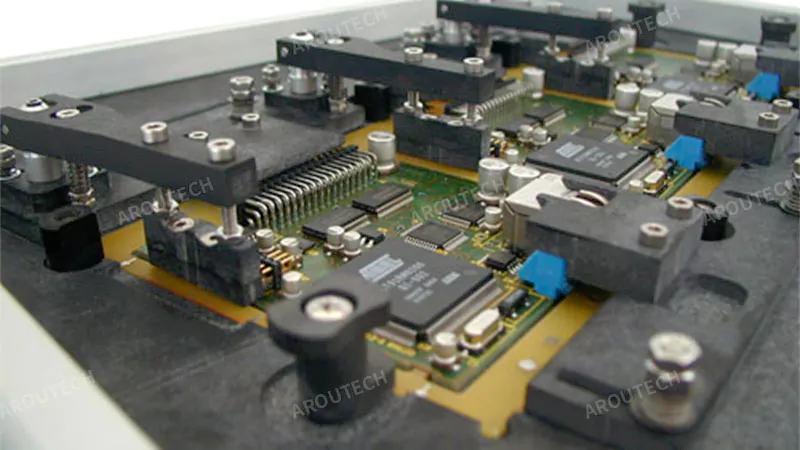
Are you struggling with inconsistent soldering, high defect rates, and production bottlenecks? You’ve optimized your process, but the root cause might be an overlooked, yet essential, tool. A wave solder pallet is a custom-machined carrier, typically made from a high-performance composite solder pallet material, that precisely holds, masks, and protects a Printed Circuit Board Assembly […]
How Can You Master Solder Pallet Design for Flawless Soldering?
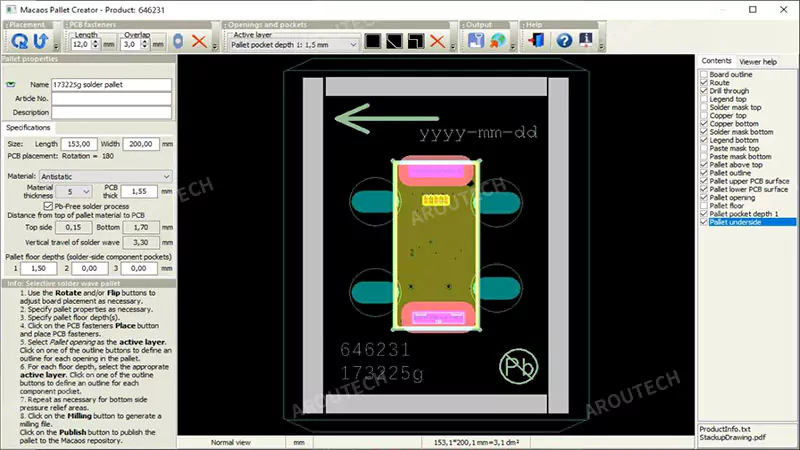
You’ve chosen the perfect material, but your soldering results are still inconsistent. The problem often lies not in the material itself, but in the blueprint used to shape it. A comprehensive solder pallet design guide involves mastering four areas: selecting the correct material thickness, implementing effective hold-downs, designing precise masking walls, and ensuring compatibility with […]
How Do You Choose the Right Solder Pallet Material for Your Process?
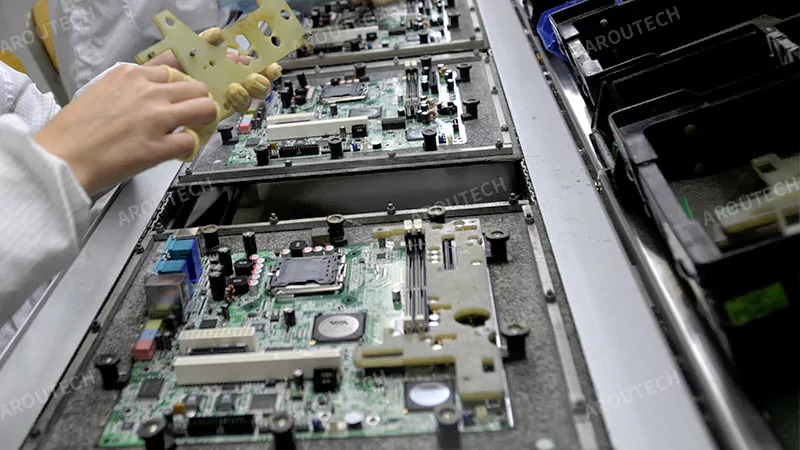
You know what a solder pallet is and why it’s critical. But now you face the core decision: choosing the material. Pick the wrong one, and you could face warping, chemical damage, and a short pallet lifespan, undermining your entire investment. To choose the right solder pallet material, you must conduct a solder pallet material […]